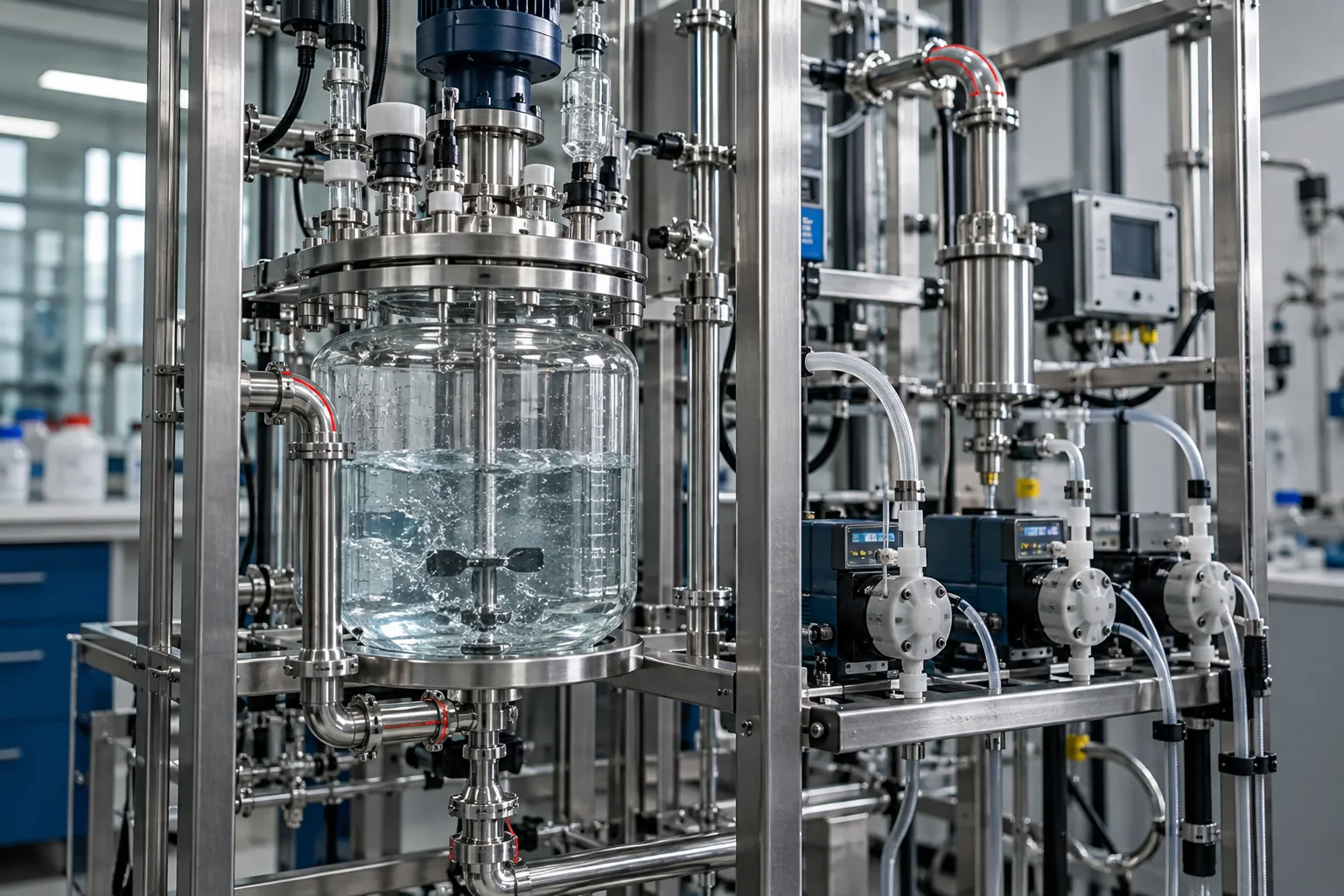
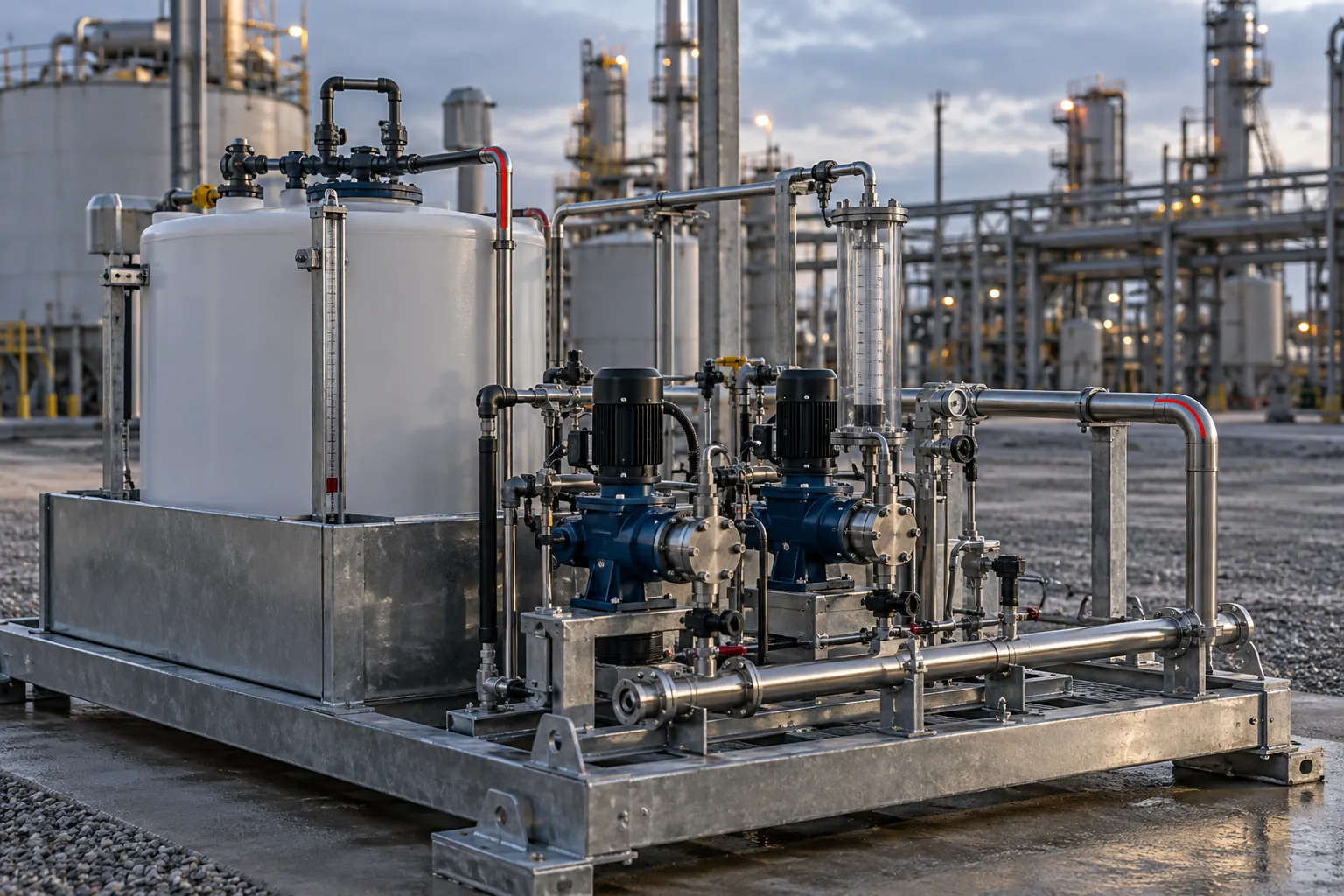
Define the water system
Identify each water source, mixing ratio, treatment point and intended destination. Review the available analyses, sampling history and changes that could affect the representativeness of a test.
Test the combinations
Establish a comparative program for the actual waters and candidate treatments. Include relevant temperature, composition, mixing, solids and chemical interactions. The program should match the intended separation, conditioning or injection duty.
Connect quality to the destination
Injection, reuse and onward processing can require different acceptance criteria. Agree the relevant oil, solids, compatibility and other quality measures with the operator and appointed specialists.
Define the decision boundary
Record the fluid system, treatment identity, test conditions and limits. A change in water source or composition can require review before the original qualification is applied again.
Roven application perspective, developed from the company’s defined technical scope and qualification approach. This article explains assessment considerations; it does not report a completed Roven project or measured customer result.
Issue 01 · October 2026. The test methods, acceptance criteria and specialist responsibilities are agreed for the actual application.