01
Production is declining or constrained
Production diagnostic and intervention assessment

For oil and gas operators and industrial clients
Specialty chemistry, applied technologies and engineering expertise—connected around your production, fluid and process challenges.
One technical lead.
From problem definition to performance review.

Connect field observations, fluid behaviour and production data to identify the constraint and prioritize the right investigation.

Qualify chemistry and materials against representative fluids, temperature, salinity and treatment requirements before a field trial.

Connect chemistry, equipment interfaces and operating procedures for an agreed application, with specialist support where required.

Review treatment response, fluid quality and operating trends against agreed criteria, then refine the program as conditions change.
A clear constraint leads to a useful assessment, a considered technical response and a defined next step.
Production diagnostic and intervention assessment
Mobility and separation pathways
Water and compatibility assessment
Nominated sour-stream assessment
Program audit and comparative qualification
Technology assessment and pilot planning
Six core solution areas. Application engineering and reliability support across the portfolio.
Explore all oilfield solutionsExplore the operating purpose, qualification basis and application approach behind each Roven platform.

Containerised configuration and nano-enabled treatment require application-specific engineering and qualification.
Connect heavy-crude and nano-enabled fluid development with a containerised application concept, pipeline integration and receiving-end separation.
Representative crude and water, temperature, hydraulic and restart requirements, and receiving-end separation criteria.
First engagement · Crude-mobility and whole-system assessment
 Qualification target
Illustrative target — not test results. Actual comparisons require an agreed benchmark, test conditions and measured data.
Develop and qualify treatment around demanding fluid behaviour, separation, water compatibility and the conditions of the intended duty.
Actual fluid composition, temperature, treatment response, materials compatibility and the combined chemical program.
First engagement · Treatment qualification and compatibility review

Consider exposure, materials and environmental implications within the defined project scope. Treatment performance must be verified.
Qualify advanced reactive materials for a defined H₂S duty, with attention to stream containment, useful capacity, monitoring and reaction-product handling.
H₂S loading and variability, kinetics, contact opportunity, useful capacity and downstream consequences.
First engagement · Sour-stream and treatment-options assessment
Crude–brine–rock assessment, application qualification and specialist pilot planning.
Application notes explain what we assess, why the interfaces matter and what evidence supports a next decision.
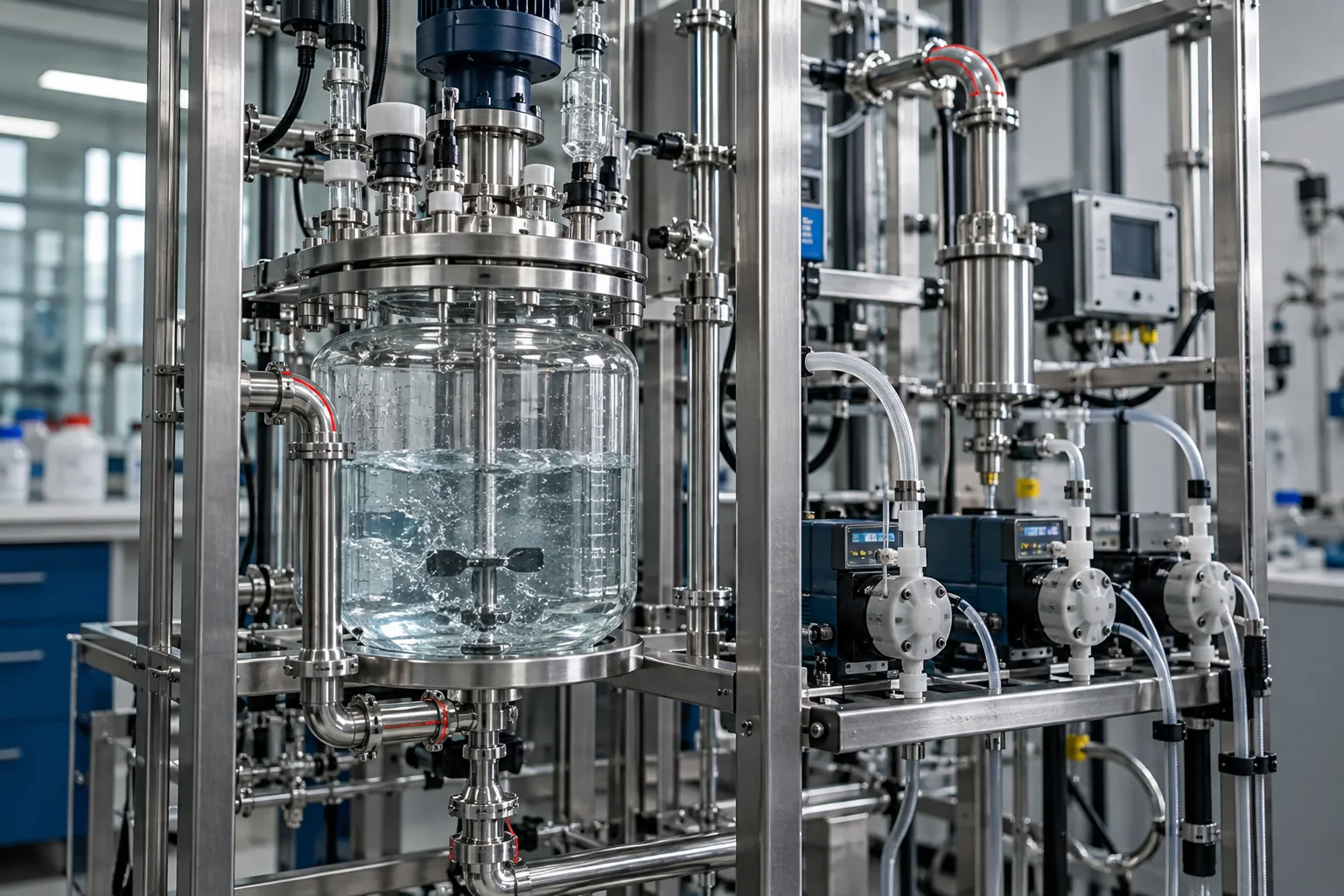
A useful test answers an operating question. It compares eligible options under representative conditions and supports a clear next decision.
Explore the reasoning
A mobility concept must work along the route and at the receiving facility. Viscosity is one part of that assessment.
Explore the reasoning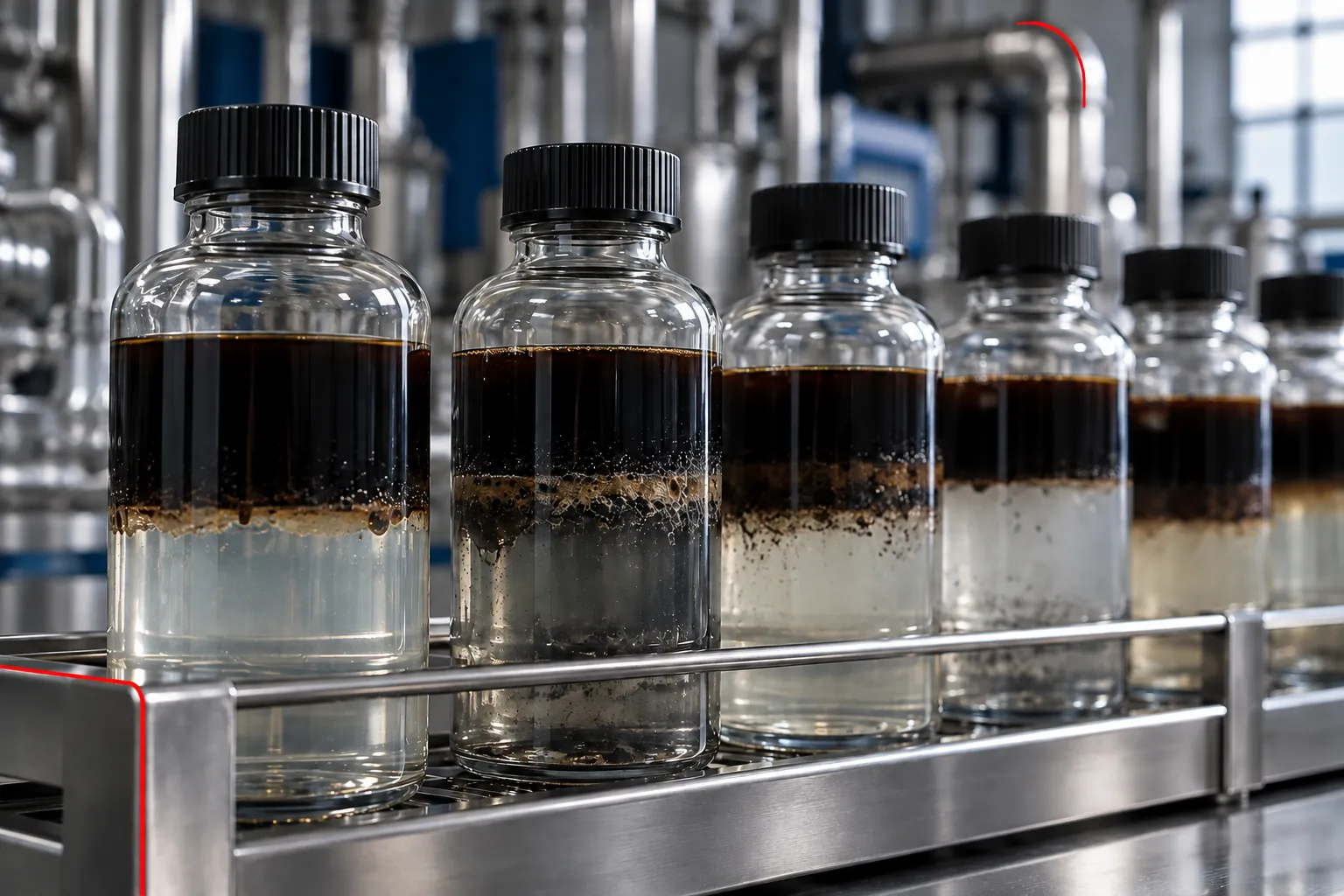
A rapid water drop can be encouraging. A useful treatment must also deliver acceptable crude, a manageable interface and suitable separated water.
Explore the reasoningExplanatory technical content. Field results are published only with a documented basis and permission.
Explore Technical EvidenceWe define the assignment, interpret qualification evidence and coordinate the interfaces between chemistry, equipment and operations.
Specialists deliver their appointed scopes. Your operating team agrees the criteria, authorizes changes and retains operating control.
See responsibilities and deliveryDefine the operating constraint, baseline and next decision.
Compare candidates under representative conditions.
Define the application, interfaces and pilot criteria.
Coordinate authorized execution and monitor the response.
Evaluate the result and establish the next justified step.

Rushdi Baragaa, Founder and Technical Lead, leads Roven’s technical assignment and the coordination of specialist expertise.
For each engagement, we establish the relevant disciplines, responsibilities and deliverables before committing to execution.
Meet the technical leadershipChoose the assignment that fits the decision you need to make. Scope, resources and deliverables are agreed before commitment.

Clarify the operating constraint and prioritize the next action.
A baseline review, ranked causes, evidence gaps and recommended next steps.

Establish whether a treatment deserves an application or pilot.
A fit assessment, comparative test program and, where justified, a pilot basis.

Keep treatment aligned with the evolving operating duty.
An agreed monitoring scope, review cadence and optimization recommendations.
Start with the asset, the operating constraint and the decision your team needs to make.