
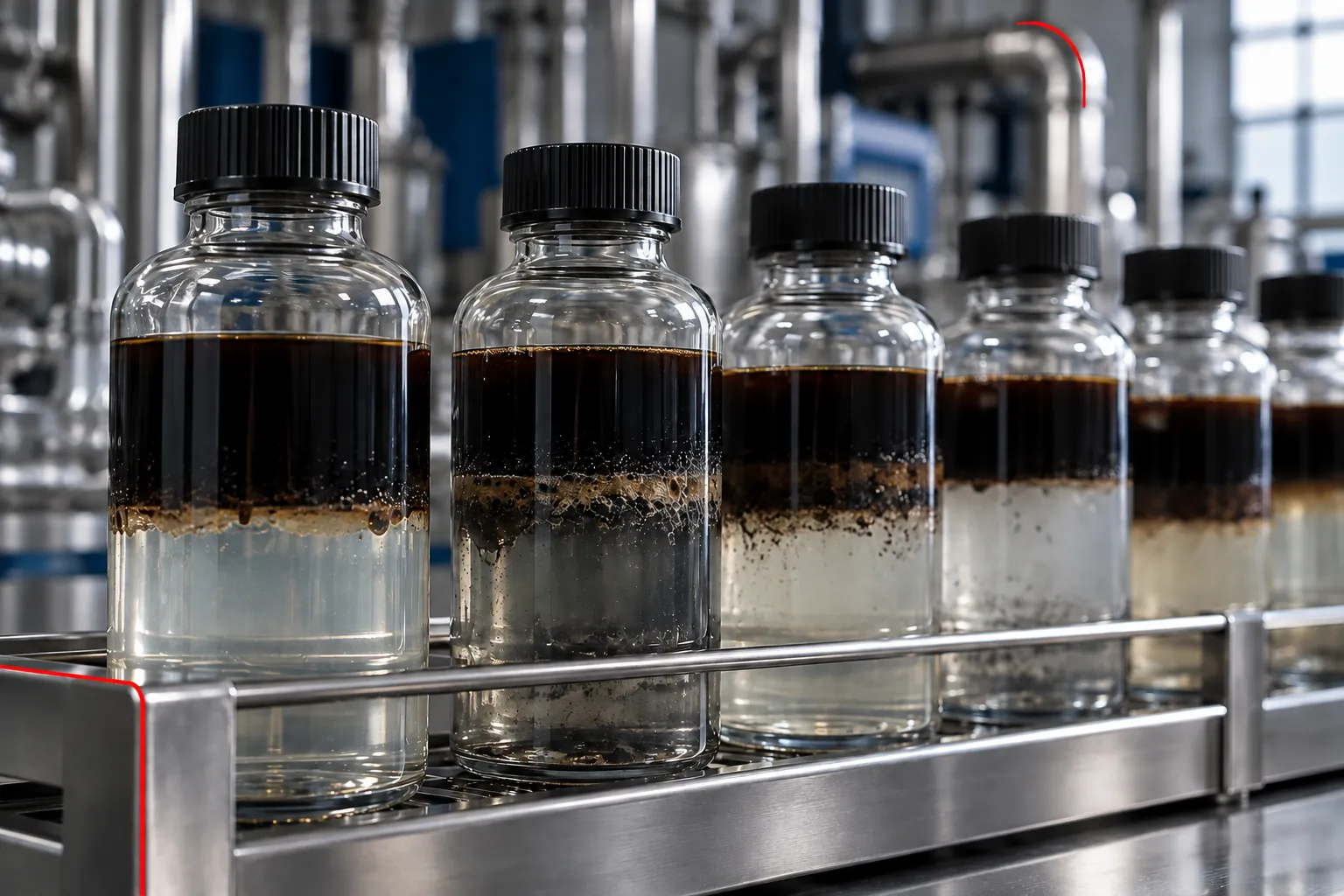
Understand the emulsion
Consider crude and brine properties, solids, temperature, mixing and residence time. Verify the actual chemical delivery before attributing poor performance to the formulation.
Measure both phases
Agree the relevant crude quality and separated-water requirements. Track interface behavior and downstream effects alongside separation rate.
Connect the test to the process
Bottle screening helps select candidates. Injection, contact, shear and real operating variability need application confirmation.
Compare total treatment cost
Assess the effective dose alongside accepted oil and water quality, utilities, waste and operating consequences. A lower chemical dose is useful only within an acceptable result.
Roven application perspective, developed from the company’s defined technical scope and qualification approach. This article explains assessment considerations; it does not report a completed Roven project or measured customer result.
Issue 01 · October 2026. The test methods, acceptance criteria and specialist responsibilities are agreed for the actual application.